This course aims at fostering professionals, who can contribute solving the international environmental problems. Bringing both foreign and Japanese students together, the advanced knowledge and skills for international cooperation, research and investigation in fields, resource management, environmental education, and human capacity building are provided and the related researches are conducted. Consequently, this course is taught in English.
The students accepted in this course
Foreign students as well as Japanese students who wish to be experts in the international environmental issues are accepted in this course. The foreign students who have not yet decided their own field of study are also very welcome to enroll in this course. Since comprehensive schooling on basic environmental science will be provided in the early stage of the course, the students could have time to find their specialty while receiving introductory education. Therefore, the students enrolled in this course are able to transfer to other courses after finding out their specialty and a supervisor. Applicants for master course can determine their supervisors in three months after the entrance time.
Lectures in this course
Introduction to Environmental Science: Students will engage with domestic and international environmental research, and present environmental issues from their own countries.
Introduction to Global Environmental Management: This lecture addresses international environmental issues, incorporating Japanese experiences, through discussions with students from diverse countries on shared challenges and measures for environmental protection.
Fundamental Course in Environmental Science Research: Students are expected to acquire basic skills, ways of thinking for conducting research including ethical issues and presentation skills.
Fundamental Course in Environmental Science: This course introduces fundamental concepts in environmental science, examines major global environmental issues, and provides an overview of methods and technologies for addressing these challenges.
Advanced Course in Environmental Pollution Comparison: This course focuses on understanding the students’ home environments and applying lessons from Japan and other countries to support sustainable development.
Advanced Course in Environmental Remote Sensing: This course introduces geospatial analysis for global environmental studies, covering remote sensing, digital image processing, and practical applications using GIS and satellite data.
Advanced Course of International Science Communication Methods: This course introduces science communication in an international context, focusing on academic writing, scientific presentations, and effective discussion and debate in English, while developing transferable communication skills across disciplines
Advanced Course in Climate Change Impacts: This course introduces the mechanisms and projections of climate change and develops skills to discuss global impacts and adaptation strategies.
Advanced Course in Environmental Geography
Introduction to Natural Environmental Studies
Introduction to Renewable Energy
Advanced Course in Hydrological Cycle
Advanced Course in Watershed Environmental Science
Advanced Course in Environmental Conservation
Advanced Course in Environmental Analytical Chemistry
Special lecture in Environmental Science Development II
Optional subject: more than 18 credits by taking subjects offering from this course, Division of Environmental Science Development, and Common Course of Graduate Schools. Subjects taught in English are only countable.
Compulsory subjects: Seminar in Environmental Science Development(Course Seminar) 4 credits Special Research I (completion of master’s study, writing the master thesis and the oral presentation) 8 credits Laboratory Works, Internship(Lab. and field works for global environmental management)4 credits
Doctoral Course
Completion of doctoral study, writing the doctoral thesis by English, and the oral presentation. A part or the whole of the thesis should be published in the international journal.
Staff in this course (Specialty)
Tatsufumi Okino, Prof. (Natural Products Chemistry)
Ram Avtar, Assoc. Prof. (GIS, Forest Ecosystem, Sustainability Science, Climate Change Adaptation and Mitigation)
Ishikawa Mamoru, Assoc. Prof. (Physical geography, Environmental study of the frozen ground regions)
Takafumi Hirata, Assoc. Prof. (Marine Ecology, Remote sensing)
Yuichi Hayakawa, Assoc. Prof. (geosciences, geomorphology, geoarchaeology)
Shiro Tsuyuzaki, Prof.
Tomonori Sato, Prof.
Junjiro Negishi, Prof.
Shin-ichiro Noro, Prof.
Yasuhiro Yamanaka, Prof.
Masayuki Senzaki, Assoc. Prof.
Ken Oshiro, Assoc. Prof.
Tong Liu, Assist. Prof.
Ayano Medo, Assist. Prof.
Examples of the theme for Master’s thesis
Environmental Contamination Risk and Conservation Systems: Applying environmental risk analysis to environmental issues by assessing the pollutants and hazardous substances.
Health–Environment Dynamics: Applying spatial and quantitative approaches to environmental issues to analyze interactions between environmental factors and public health.
Climate Risk in Human–Environment Systems: Applying geospatial and socio-ecological analysis to environmental issues using integrated climate risk assessment approaches.
Land-Use Dynamics and Urban Spatial Transformation: Applying Earth observation, GIS, remote sensing, and data-driven approaches to environmental issues through integrated analysis of land-use and land-cover change, urban expansion, and spatial pattern dynamics.
Disaster Vulnerability and Impact Assessment: Applying hazard and vulnerability analysis to environmental issues using event-based impact evaluation approaches.
Oceanic Change and Marine Ecosystems: Applying climate-driven environmental analysis to environmental issues using ocean–ecosystem interaction assessment approaches.
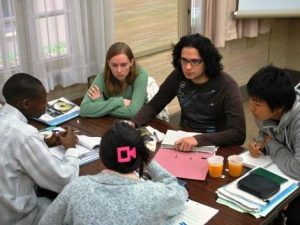
Seminar
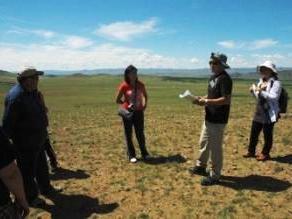
Investigation in Mongolia
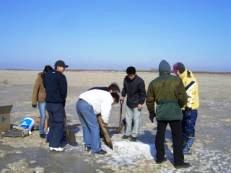
Field works in Indonesia
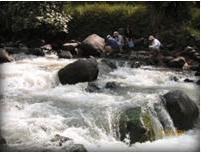
Field works on a river of China
If you have any questions on the education and activity of this course, please contact with the staff and their homepages shown below.
Dr. Tatsufumi Okino: okino (at) ees.hokudai.ac.jp
Dr. Ishikawa Mamoru: mishi (at) ees.hokudai.ac.jp
Dr. Ram Avtar: ram (at) ees.hokudai.ac.jp
Dr. Jorge Garcia Molinos: jorgegmolinos (at) arc.hokudai.ac.jp
Dr. Takafumi Hirata: tahi (at) arc.hokudai.ac.jp
Dr. Yuichi Hayakawa: hayakawa (at) eis.hokudai.ac.jp
Contact to office
Graduate School of Environ. Sci.
Faculty of Environ. Earth Science
Hokkaido University
N10W5 Sapporo
Hokkaido 060-0810 Query Form